
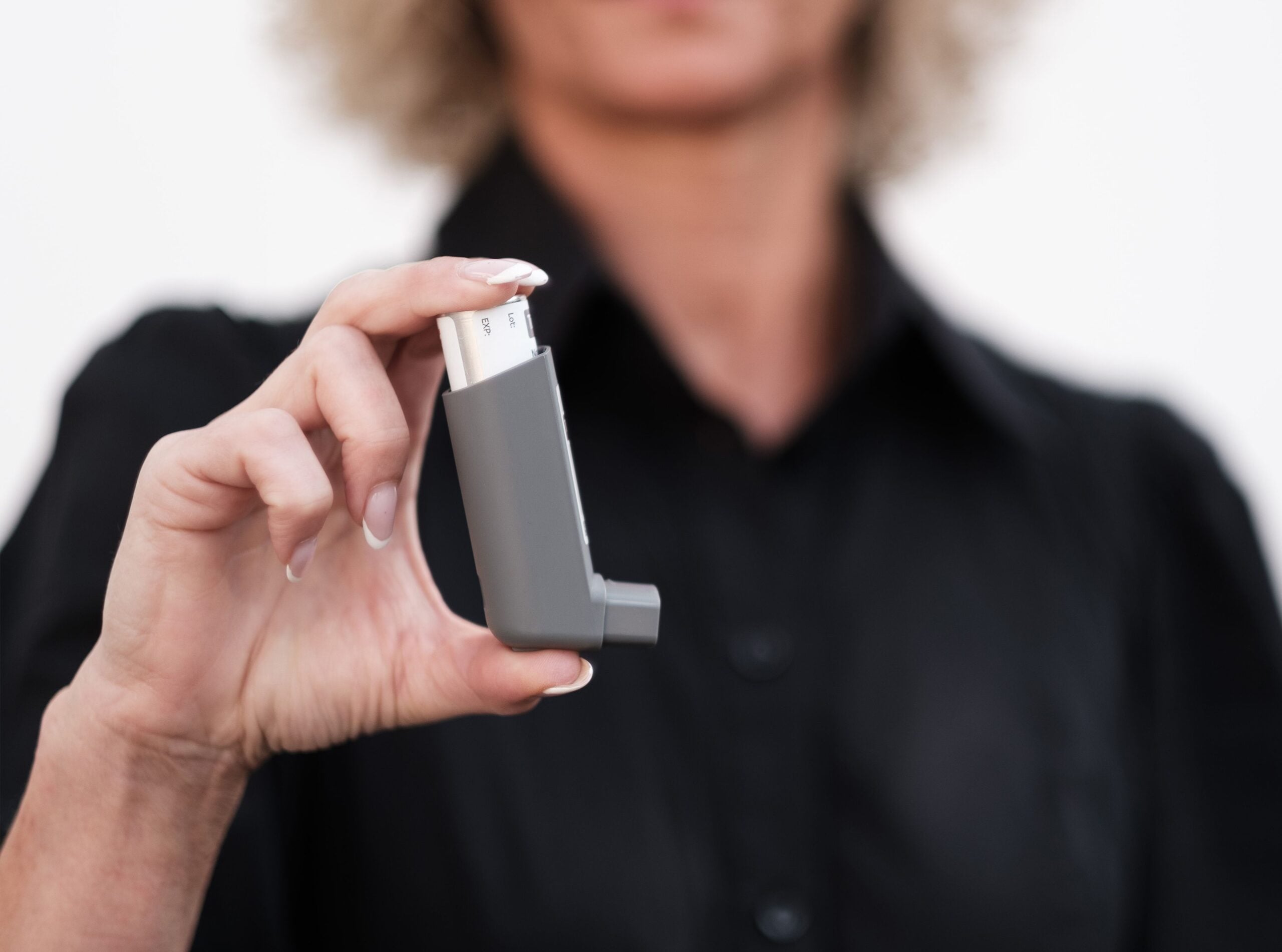
Asthma is a chronic lung condition that affects millions of working Americans, and its unpredictable flare-ups can make it difficult to maintain a consistent work schedule. The Family and Medical Leave Act (FMLA) explicitly names asthma as a qualifying chronic condition in federal regulations, which means eligible employees may be able to take protected time off when symptoms flare or when treatment requires missing work. Understanding how FMLA for asthma works can help you protect your job while managing your health.
Key takeaways
- Asthma is explicitly listed in federal FMLA regulations (29 CFR 825.115) as an example of a chronic condition that may qualify for protected leave.
- Most employees with asthma use intermittent FMLA to cover individual flare-ups and medical appointments, rather than taking one extended block of leave.
- If your own provider cannot complete your certification before an employer deadline, a board-certified physician can evaluate your condition and complete the paperwork through a secure video visit.
What is FMLA, and how does it apply to asthma?
The Family and Medical Leave Act (FMLA) is a federal law administered by the U.S. Department of Labor that allows eligible employees to take up to 12 workweeks of unpaid, job-protected leave per year for qualifying medical and family reasons. Your employer is required to maintain your health benefits and restore you to the same or an equivalent position when you return.
For people with asthma, FMLA can work in two ways. Continuous FMLA covers a longer absence taken all at once, such as recovering from a serious exacerbation requiring hospitalization. Intermittent FMLA covers leave taken in separate blocks (a few hours or a day at a time) and is typically the right fit for asthma because flare-ups are unpredictable and rarely require extended absence. You can learn more about how intermittent FMLA protections work and how frequency and duration are documented.
FMLA leave is unpaid unless you or your employer substitute accrued paid leave during the absence. FMLA protects your job but does not replace your income. If income replacement matters during a prolonged absence, FMLA paired with short-term disability is worth exploring with your HR or leave administrator.
Ready to protect your time off? Schedule an evaluation.
If you are managing asthma and need FMLA certification before your employer’s deadline, a board-certified physician can evaluate your condition through a 15-minute secure video visit and complete your paperwork. MyFMLA offers intermittent FMLA evaluations for patients whose own provider is unavailable or unable to complete the forms in time. Certification supports your request; your employer, leave administrator, or insurance carrier makes the final determination. The sections below explain who qualifies and what the certification must cover.
Does asthma qualify as a serious health condition under FMLA?
Yes, asthma can qualify, and in many cases it does. Under 29 CFR 825.115(c), a chronic serious health condition qualifies for FMLA leave when it meets three criteria:
- It requires periodic visits (at least twice a year) for treatment by a health care provider.
- It continues over an extended period of time, including recurring episodes of a single underlying condition.
- It may cause episodic rather than a continuing period of incapacity, with asthma listed in the regulation as an explicit example.
One of the more important protections the regulation provides is that asthma absences do not need to last more than three consecutive full calendar days to count. The regulation directly states that an employee with asthma may qualify for protected leave due to the onset of an attack, or because a health care provider advised the employee to stay home when pollen counts exceed a certain level, even if no provider visit occurs during that specific absence. If your doctor has established that your asthma requires avoidance of certain triggers or rest during flare-ups, those days can fall under your certification even when you do not visit a clinic every time.
According to the National Heart, Lung, and Blood Institute, asthma affects 1 in 13 Americans. Research published in the Journal of Asthma and Allergy (Gruffydd-Jones et al., 2019) found that employees with symptomatic asthma missed an average of 9.3% of their weekly work hours due to symptoms, and that overall work productivity loss from asthma reached 36% when accounting for both absences and reduced performance at work. Job protection through FMLA can be a meaningful safety net at that level of disruption.
Intermittent vs. continuous FMLA for asthma
Intermittent FMLA is the more common choice for asthma. It covers time missed in blocks corresponding to flare-ups, urgent care visits, or pulmonology appointments. The certification form asks your provider to estimate how often flare-ups may occur and how long each episode typically lasts. Understanding intermittent FMLA frequency and duration rules in advance can help you and your provider fill out that portion accurately.
Continuous FMLA becomes relevant if asthma leads to a prolonged hospitalization or a serious exacerbation keeping you home for a week or more. For employees who also need income during an extended absence, FMLA does not replace wages on its own. FMLA protects the job; short-term disability may replace a portion of your income, and the two programs often run simultaneously and require separate filings.
Who qualifies for FMLA with asthma?
Qualifying for FMLA involves two separate checks: whether your employer is covered and whether you as an employee are eligible. According to DOL Fact Sheet 28, covered employers include private-sector employers with 50 or more employees during at least 20 workweeks in the current or prior calendar year, as well as public agencies and public and private elementary and secondary schools regardless of size.
As an employee, you are eligible if you have worked for the employer for at least 12 months, logged at least 1,250 hours of service in the prior 12 months, and work at a location where the employer has at least 50 employees within 75 miles.
If your employer does not meet the 50-employee threshold, federal FMLA does not apply. Some states have family and medical leave laws covering smaller workplaces. Your HR department or leave administrator can confirm coverage and eligibility for your situation. Employers unable to offer FMLA may still have obligations under the Americans with Disabilities Act (ADA); an ADA accommodation evaluation is a separate process worth asking about.
How to get FMLA certification for asthma: a step-by-step guide
FMLA paperwork follows a defined process:
- Notify your employer. Inform HR or your manager that you may need FMLA leave for a medical condition. You do not need to name the condition, but provide enough information for the employer to recognize that FMLA may apply.
- Request or receive the certification form. Your employer should provide the appropriate form within five business days. The standard federal form is the DOL WH-380-E. Some employers use their own equivalent. See a guide to which FMLA forms you need and how to complete them.
- See a health care provider. A physician, nurse practitioner, or physician’s assistant authorized to treat asthma can complete the certification. The provider documents functional limitations, estimated frequency and duration of episodes, and whether the condition qualifies, without needing to disclose your diagnosis.
- Return the form within 15 calendar days. Incomplete certifications that describe frequency and duration only as “unknown” or “indeterminate” without a range can delay or result in denial of your request.
If your regular provider is unavailable or unwilling to complete the forms, you are not required to go without documentation. A board-certified physician can evaluate you through a secure video visit and complete the certification.
Common reasons asthma FMLA certification gets delayed
A few situations regularly slow down or stall asthma-related FMLA requests:
- Eligibility gaps. If you have not yet worked 12 months for your current employer, or logged 1,250 hours in the prior 12 months, federal FMLA does not apply regardless of how well-documented your condition is.
- Vague certifications. The certification form requires an estimated frequency and duration of flare-ups. Forms that describe flare-ups only as “unpredictable” without providing a range may prompt your employer to request additional information or a second opinion.
- Provider limitations. Not every provider completes FMLA paperwork consistently, particularly for new patients. Finding a provider who can complete the forms promptly is often the most practical obstacle.
- Recertification lapses. Certifications for chronic conditions generally remain valid for up to 12 months. If your condition changes or you are using leave more frequently than estimated, your employer may request recertification earlier.
When to seek emergency care for asthma
FMLA leave is for managing a known condition. If you experience an acute, severe asthma attack, leave documentation is not what requires attention in that moment. According to the Mayo Clinic, severe asthma attacks can be life-threatening. Seek immediate medical care for shortness of breath that is not improving with a rescue inhaler, bluish color to the lips or fingernails, difficulty speaking in full sentences, or symptoms worsening rapidly without response to medication.
This is not an emergency service. In a medical emergency, call 911 or go to the nearest emergency room.
Frequently asked questions
Can I take intermittent FMLA for a few hours at a time for asthma?
Yes. Intermittent FMLA can be taken in blocks as small as the smallest increment your employer uses to track time off, often one hour. If an asthma flare-up requires you to leave work mid-shift, that time can count against your FMLA entitlement as long as you have an approved certification in place.
Does my employer have to approve my FMLA leave for asthma?
Your employer decides whether you are eligible and whether the leave qualifies under FMLA. The certification supports your request; your employer, leave administrator, or insurance carrier makes the final determination. If the certification is complete and sufficient and you meet eligibility criteria, your employer generally cannot deny the leave. For concerns about a potential FMLA violation, the DOL’s Wage and Hour Division handles complaints at 1-866-4-USWAGE.
Can I take FMLA for a child’s or spouse’s asthma?
Yes. FMLA allows eligible employees to take leave to care for a spouse, child, or parent with a serious health condition. If your child’s or spouse’s asthma qualifies and requires your direct care, you may be eligible for intermittent leave to accompany them to appointments or care for them during flare-ups, subject to the same employer coverage and employee eligibility requirements.
What if my regular doctor won’t complete my FMLA paperwork?
Your employer cannot require you to use a specific physician, but it can require a licensed health care provider authorized to treat your condition. If your primary care provider is unavailable, too busy, or unwilling to complete the forms, you can seek an evaluation from another qualified physician, including through a telehealth service.
Does FMLA pay me during my leave for asthma?
Federal FMLA leave is unpaid. You may be able to run accrued paid sick or vacation time alongside FMLA leave depending on your employer’s policy. If you need income during a prolonged absence, short-term disability insurance through your employer may replace a portion of your wages. Addressing both at the same time can help avoid coverage gaps.
How long does FMLA certification for asthma take?
It depends on the evaluating provider. At MyFMLA, intermittent FMLA certification is typically completed within 1 business day after the appointment when all required information is available. Continuous FMLA requests are typically completed within 1 to 3 business days after the appointment.
Take the next step toward FMLA certification
If asthma is affecting your attendance and you need FMLA certification before your employer’s deadline, MyFMLA connects you with board-certified physicians through a 15-minute secure video visit. See current pricing on the request page and start your evaluation when you are ready. Certification supports your leave request but does not guarantee approval; your employer, leave administrator, or insurance carrier makes the final decision.
Sources
- 29 CFR 825.115 Continuing Treatment, Electronic Code of Federal Regulations, U.S. Department of Labor.
- Fact Sheet 28: The Family and Medical Leave Act, Wage and Hour Division, U.S. Department of Labor.
- Family and Medical Leave Act Overview, Wage and Hour Division, U.S. Department of Labor.
- FMLA Forms, Wage and Hour Division, U.S. Department of Labor. (Includes WH-380-E for employee’s own serious health condition.)
- Employee’s Guide to the FMLA, Wage and Hour Division, U.S. Department of Labor.
- Asthma Overview, National Heart, Lung, and Blood Institute, NIH.
- FastStats: Asthma, National Center for Health Statistics, CDC, 2024.
- Pate CA, Zahran HS. The Status of Asthma in the United States. Prev Chronic Dis. 2024;21:240005., CDC.
- Gruffydd-Jones K, et al. Asthma impacts on workplace productivity in employed patients who are symptomatic despite background therapy: a multinational survey. J Asthma Allergy. 2019;12:183-194. PubMed PMID 31372003.
- Asthma: Symptoms and Causes, Mayo Clinic.
Medical documentation supports your request but does not guarantee approval. Final decisions are made by your employer, insurance carrier, leave administrator, or applicable state program.
This article is for informational purposes only and is not a substitute for professional medical advice.