
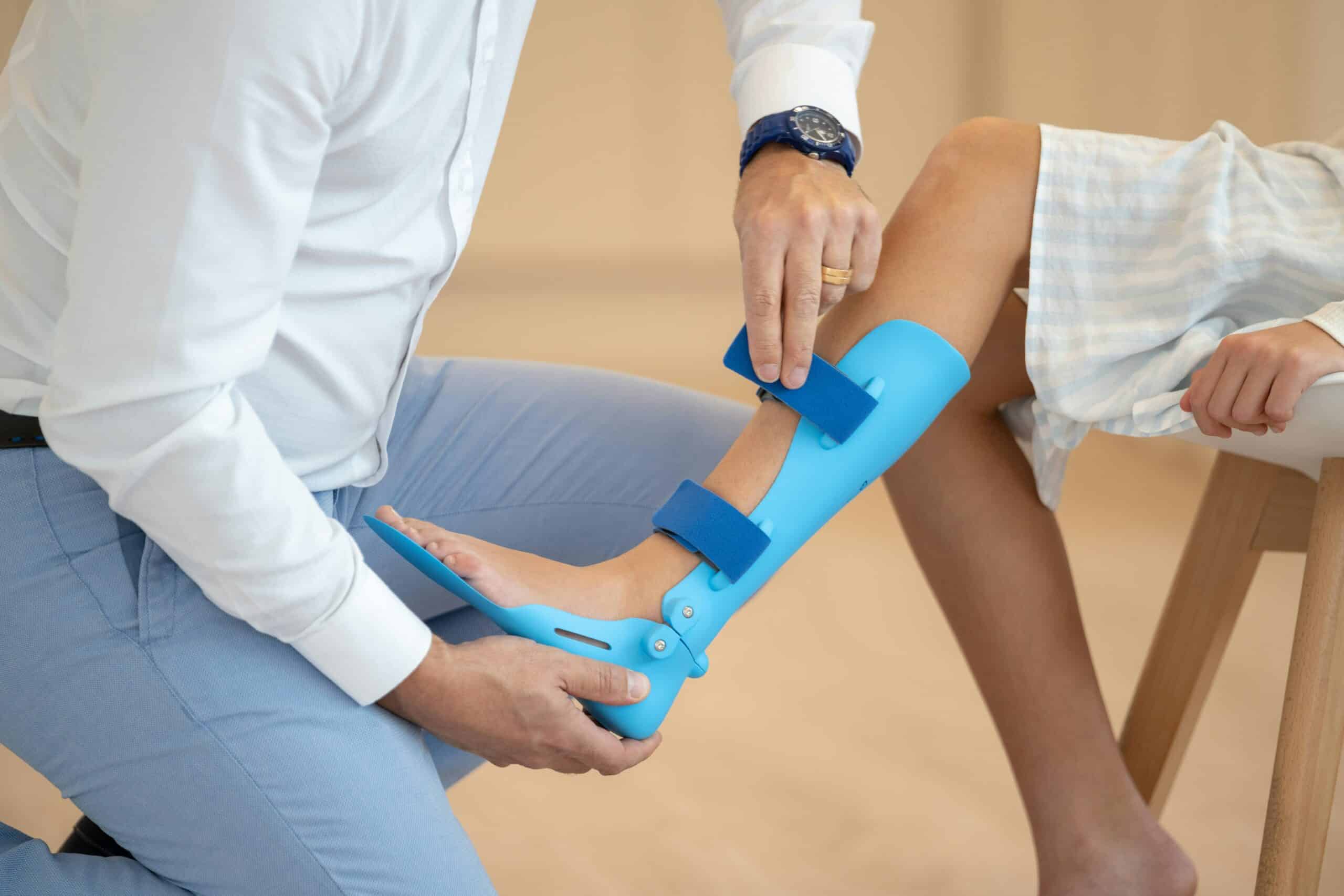
New Jersey Temporary Disability Insurance (TDI) is a state program that replaces part of your wages when an illness, injury, surgery, or pregnancy that isn’t work-related keeps you from working. In 2026, it pays 85% of your average weekly wage, up to $1,119 a week, for as long as 26 weeks. If you’re out of work and worried about bills, knowing how TDI works can help you file correctly the first time.
Key takeaways
- TDI can pay for up to 26 weeks, and most claims for pregnancy cover about 10 to 12 weeks in total.
- You have 30 days from the start of your disability to apply, and a health care provider must certify that you can’t work.
- TDI replaces part of your income, while FMLA protects your job, so many workers file for both at the same time.
What is New Jersey Temporary Disability Insurance?
TDI is a form of short-term disability insurance (coverage that pays part of your wages for a limited time while you can’t work for health reasons). Most New Jersey workers pay into it through a small payroll deduction, so it isn’t something you need to buy separately.
It’s easy to confuse TDI with similar programs, so here’s how it differs:
- Family Leave Insurance (FLI) pays you to care for a family member or bond with a new child, while TDI covers your own health condition.
- Workers’ compensation covers injuries and illnesses caused by your job, while TDI covers conditions that aren’t work-related.
- Federal FMLA provides unpaid, job-protected leave, while TDI provides pay.
- Social Security Disability Insurance is for long-term disabilities, while TDI is for temporary ones.
Most claims come from employees on the state plan, but some employers use an approved private plan instead. A private plan must offer benefits at least as good as the state plan, and you apply through your employer’s insurance carrier rather than the state.
Get help with your disability and FMLA paperwork
If you need short-term disability or FMLA certification and your own provider can’t complete it in time, MyFMLA can help. A board-certified physician will evaluate your condition in a secure video visit. Intermittent FMLA documentation is typically completed within 1 business day, and continuous FMLA and more comprehensive requests within 1 to 3 business days after the appointment, when all required information is available. Start your evaluation; current pricing is shown on the booking page.
Who qualifies for NJ temporary disability?
You generally qualify if you can’t work because of a non-work-related health condition, you’ve paid into the program, and you meet the minimum earnings test. A licensed health care provider must certify that you’re unable to work.
For 2026 claims, you must have earned either:
- At least $310 a week for 20 weeks in your base year, or
- At least $15,500 in total during your base year.
Your base year is the 52 weeks drawn from four of the five full calendar quarters before your disability began. If you don’t qualify that way, the state may check an alternate base year using more recent wages.
Some workers aren’t covered, including federal employees, most out-of-state employees, properly classified independent contractors, and some government and faith-based employers. If your employer should have paid into the program but didn’t, you can still apply.
If you were already unemployed when you became disabled, you may qualify for a related benefit called Disability During Unemployment. You apply the same way, and the state routes your claim. If you’ve worked in California, our guide to how California State Disability Insurance works explains a similar program there.
How much does NJ temporary disability pay?
TDI pays 85% of your average weekly wage, up to a maximum of $1,119 per week in 2026. The state calculates your average weekly wage by dividing your base-year earnings by the number of weeks you worked.
A few other limits apply:
- Total benefits for one disability are capped at the lesser of one-third of your base-year wages or 26 times your weekly rate.
- Taxes: Benefits are subject to federal income tax but not New Jersey income tax. Social Security and Medicare taxes are withheld.
- Payment method: Benefits are usually loaded onto a debit card every two weeks.
These figures are updated every year, so check the state’s TDI pages for the current weekly maximum and earnings requirements before you apply.
How does the waiting week work?
The first 7 days of your disability are an unpaid waiting week required by law. Payments start on the eighth day. The waiting week is paid later if your disability lasts 22 days or more and your employer didn’t pay you for those days.
Does TDI protect your job?
As of July 17, 2026, yes, in most cases. New Jersey added job protection for workers receiving TDI or FLI, so you have the right to return to your job or an equivalent one, as long as your leave isn’t already protected under another state leave law. The state notes that formal rulemaking may change some details.
Many people still pair TDI with federal FMLA, which gives eligible employees up to 12 workweeks of job-protected leave with continued group health coverage. FMLA provides job-protected leave but doesn’t replace income. Short-term disability benefits like TDI may replace part of your income. Our guide to FMLA and short-term disability explains how the two work together.
General FMLA eligibility usually requires working for a covered employer for 12 months and 1,250 hours in the past year at a qualifying worksite. Your HR department or leave administrator can confirm what applies to you. If your employer also needs FMLA paperwork and your own doctor can’t complete it in time, a board-certified physician can evaluate you for FMLA and short-term disability certification in a secure video visit. You must be physically located in New Jersey at the time of the visit.
How to apply for NJ temporary disability
Applying online is the fastest option. You can start on or after the first day you’re unable to work, and the deadline is 30 days after your disability begins. Late claims may be reduced or denied unless you explain the delay.
- Stop working and see a provider. You must be under the care of a health care provider within 10 days of the day you first became unable to work.
- Gather your information. You’ll need your Social Security number, your dates of disability, your provider’s contact details, and your expected return-to-work date.
- Apply online, by mail, or by fax. Use one method only, since duplicate applications slow things down. Some applicants must verify their identity.
- Give your provider your Online Form ID. Your provider uses it to submit the medical certification online. The state doesn’t contact your provider for you.
- Extend your claim if needed. Before your last approved payment, you’ll get a notice letting you extend the claim with an updated certification or close it when you return to work.
If you’re on a private plan, apply directly with your employer’s insurance carrier. Applications sent to the state are forwarded, which can add weeks to processing.
Who can certify a TDI claim?
The state accepts certification from a range of licensed providers, including:
- Medical doctors and osteopathic physicians
- Advanced practice nurses and nurse practitioners
- Psychologists, chiropractors, dentists, podiatrists, and optometrists
- Certified nurse midwives, and physician assistants under a physician’s supervision
Licensed counselors and social workers can’t submit TDI medical information. If you’re seeing one for a mental health condition, a physician, nurse practitioner, or psychologist will need to complete the certification.
Can you get NJ temporary disability for pregnancy?
Yes. Pregnancy is treated like any other temporary disability. Benefits are usually payable for up to 4 weeks before your due date and 6 weeks after delivery, or 8 weeks after a cesarean birth. That typically adds up to about 10 to 12 weeks.
Your provider can certify a longer period if you have complications before or after delivery. After your TDI recovery period ends, you may move to FLI for bonding time with your baby.
Paid time off around birth may matter for health as well as income. An analysis of state temporary disability programs found that paid maternity leave through these programs was linked to a lower share of low birth weight and early term births. A national survey of new mothers found that those who took paid leave had lower odds of rehospitalization for themselves and their infants than those who took unpaid or no leave.
Can you work part time while on TDI?
Sometimes. If your last employer agrees, you may return part time and receive partial benefits after receiving full benefits for at least 7 consecutive days, not counting the waiting week. Partial benefits can last up to 8 weeks, or 12 with medical approval, and your weekly benefit is reduced based on the hours you work.
A gradual return can help some people stay connected to work. Research on a similar state program found that claimants who used partial return-to-work benefits earned more and collected benefits for fewer weeks than those who didn’t.
When to seek medical attention
TDI is for recovery, and your health comes first. Contact a health care provider if your symptoms are getting worse, a new symptom appears, or you’re not recovering as expected. Your provider can update your certification if you need more time.
This is not an emergency service. If you have chest pain, trouble breathing, signs of a stroke, or another emergency, call 911 or go to the nearest emergency room.
Frequently asked questions
How long does it take to get NJ temporary disability?
The state processes applications in the order received. Missing information or a late medical certification are the most common causes of delay, so make sure your provider submits their part promptly.
Can I use sick time before TDI?
It depends on your employer’s policy. Employers can’t force you to use time accrued under New Jersey’s earned sick leave law before TDI, but some may require you to use other paid time off. Ask HR how your employer’s policy works, and see our guide to FMLA forms and how to complete them if your employer also needs FMLA paperwork.
What if my TDI claim is denied?
You can appeal. For state plan claims, you generally have 21 calendar days from the mailing date on the decision notice to file an appeal online or in writing.
Can I get TDI for a mental health condition?
Yes, if a qualifying provider certifies that your condition keeps you from working. Depression, anxiety, and other mental health conditions can qualify, and our guide to taking FMLA for mental health covers the job-protection side. If you’re in crisis or having thoughts of suicide, call or text 988 to reach the Suicide & Crisis Lifeline.
Is TDI the same as FMLA?
No. TDI is a New Jersey program that pays part of your wages, while FMLA is a federal law that protects your job without pay. They often apply at the same time, and each has its own paperwork. Our guide to FMLA in New Jersey covers how the state and federal programs fit together.
Who decides whether my TDI claim is approved?
The state, or your employer’s private plan carrier, makes the decision. Medical certification supports your claim, but it does not guarantee approval.
Sources
- New Jersey Department of Labor and Workforce Development, Division of Temporary Disability and Family Leave Insurance. Accessed October 15, 2026. Temporary Disability Insurance. https://www.nj.gov/labor/myleavebenefits/worker/tdi/
- New Jersey Department of Labor and Workforce Development, Division of Temporary Disability and Family Leave Insurance. Accessed October 15, 2026. Waiting Week, Explained. https://www.nj.gov/labor/myleavebenefits/worker/resources/waiting-week.shtml
- New Jersey Department of Labor and Workforce Development, Division of Temporary Disability and Family Leave Insurance. Accessed October 15, 2026. When You’re Pregnant or Just Had a Baby. https://www.nj.gov/labor/myleavebenefits/worker/maternity
- New Jersey Department of Labor and Workforce Development, Division of Temporary Disability and Family Leave Insurance. Accessed October 15, 2026. Approved Healthcare Providers. https://www.nj.gov/labor/myleavebenefits/worker/resources/approvedmedicalpractitioners.shtml
- New Jersey Department of Labor and Workforce Development, Division of Temporary Disability and Family Leave Insurance. Accessed October 15, 2026. Frequently Asked Questions: Temporary Disability Insurance. https://www.nj.gov/labor/myleavebenefits/help/faq/tdi.shtml
- New Jersey Department of Labor and Workforce Development, Division of Temporary Disability and Family Leave Insurance. Accessed October 15, 2026. Appealing a Decision. https://www.nj.gov/labor/myleavebenefits/worker/resources/appeals.shtml
- New Jersey Department of Labor and Workforce Development, Division of Temporary Disability and Family Leave Insurance. Effective July 17, 2026. NJ Expands Job-Protected Leave for Workers. https://www.nj.gov/labor/myleavebenefits/worker/job-protection-information/more-protections.shtml
- U.S. Department of Labor, Wage and Hour Division. Accessed October 15, 2026. Fact Sheet #28: The Family and Medical Leave Act. https://www.dol.gov/agencies/whd/fact-sheets/28-fmla
- Stearns J. The effects of paid maternity leave: evidence from Temporary Disability Insurance. J Health Econ. 2015;43:85-102. doi:10.1016/j.jhealeco.2015.04.005. https://pubmed.ncbi.nlm.nih.gov/26218984/
- Jou J, Kozhimannil KB, Abraham JM, Blewett LA, McGovern PM. Paid maternity leave in the United States: associations with maternal and infant health. Matern Child Health J. 2018;22(2):216-225. doi:10.1007/s10995-017-2393-x. https://pubmed.ncbi.nlm.nih.gov/29098488/
- Bourbonniere AM, Mann DR. Benefit duration and return to work outcomes in short term disability insurance programs: evidence from Temporary Disability Insurance program. J Occup Rehabil. 2018;28(4):597-609. doi:10.1007/s10926-018-9779-5. https://pubmed.ncbi.nlm.nih.gov/29846857/
Medical documentation supports your request but does not guarantee approval. Final decisions are made by your employer, insurance carrier, leave administrator, school, or applicable state program.
This article is for informational purposes only and is not a substitute for professional medical advice.
This is not an emergency service. In an emergency, call 911 or go to the nearest emergency room.