
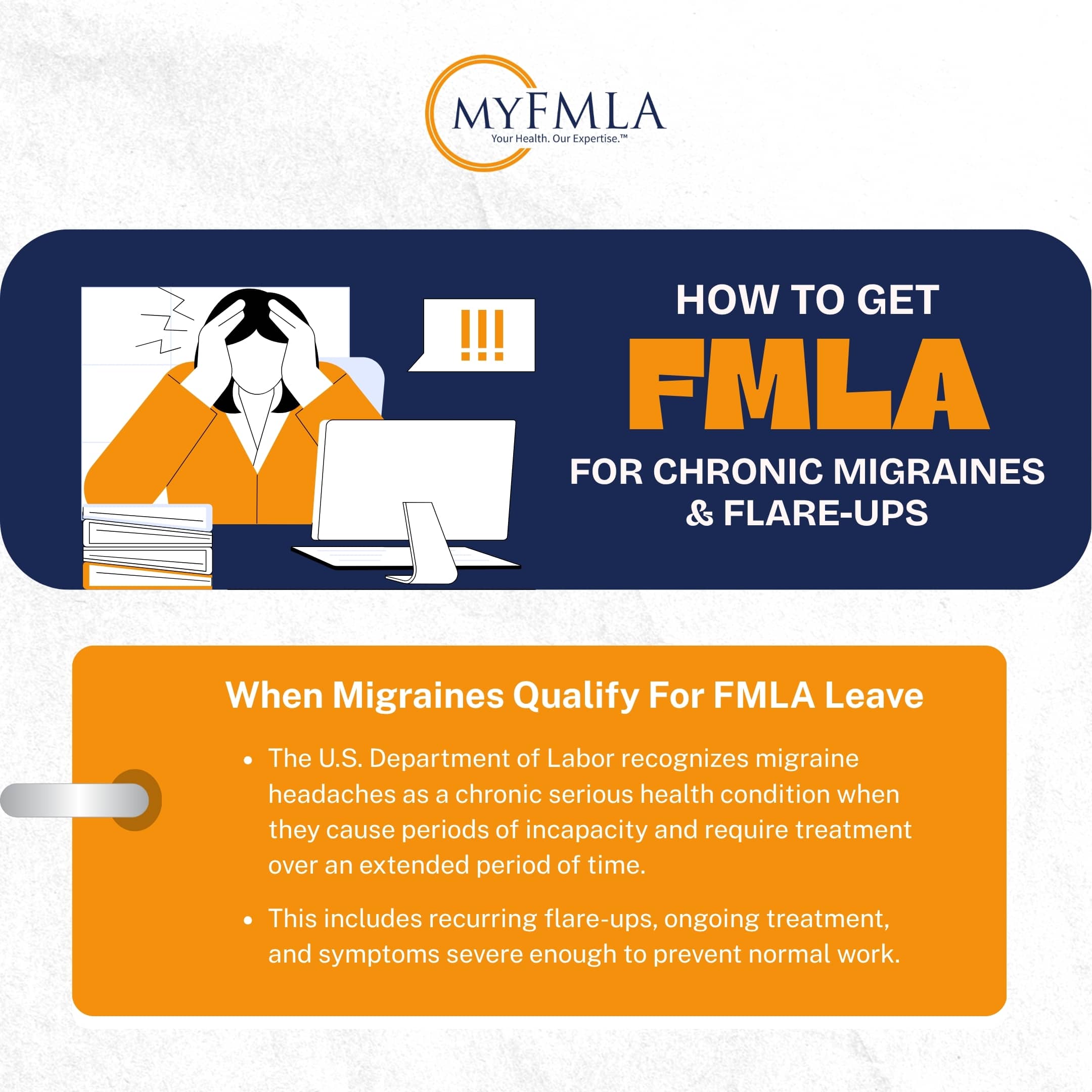
For employees living with recurring migraine attacks, the hardest part is often not the pain itself—it is the disruption. A migraine flare-up can make it impossible to concentrate, tolerate light, drive, speak clearly, or perform essential job duties.
The U.S. Department of Labor recognizes migraine headaches as an example of a chronic serious health condition when they cause periods of incapacity and require treatment over an extended period of time. It also explains that a chronic serious health condition must require periodic treatment at least twice a year and may cause episodic periods of incapacity rather than continuous illness.
That matters because FMLA for chronic migraine is not limited to people who need long stretches away from work. It can also protect employees whose symptoms come and go, especially when flare-ups interfere with work attendance or treatment appointments.
Under FMLA, eligible employees may take leave when they are unable to perform the essential functions of their job due to a serious health condition, and migraine headaches are specifically identified by the Department of Labor as a qualifying example when they prevent work.
When Migraines Qualify for FMLA Leave
Not every headache qualifies for FMLA protection. The law focuses on whether the condition meets the definition of a serious health condition.
For migraines, this usually means:
- Recurring flare-ups over an extended period
- Ongoing treatment from a healthcare provider
- Symptoms severe enough to prevent normal work
- Need for intermittent leave or reduced schedule leave
- Medical documentation supporting work limitations
Migraine symptoms that may support FMLA certification include:
- Severe head pain
- Nausea or vomiting
- Light sensitivity (photophobia)
- Sound sensitivity (phonophobia)
- Visual disturbances or aura
- Dizziness or balance problems
- Difficulty concentrating
- Temporary inability to drive or safely perform work duties
Because migraines are considered an invisible illness, employers rely heavily on provider documentation to understand the seriousness of the condition.
That is why strong certification matters.
Why Migraines Are Difficult to Document
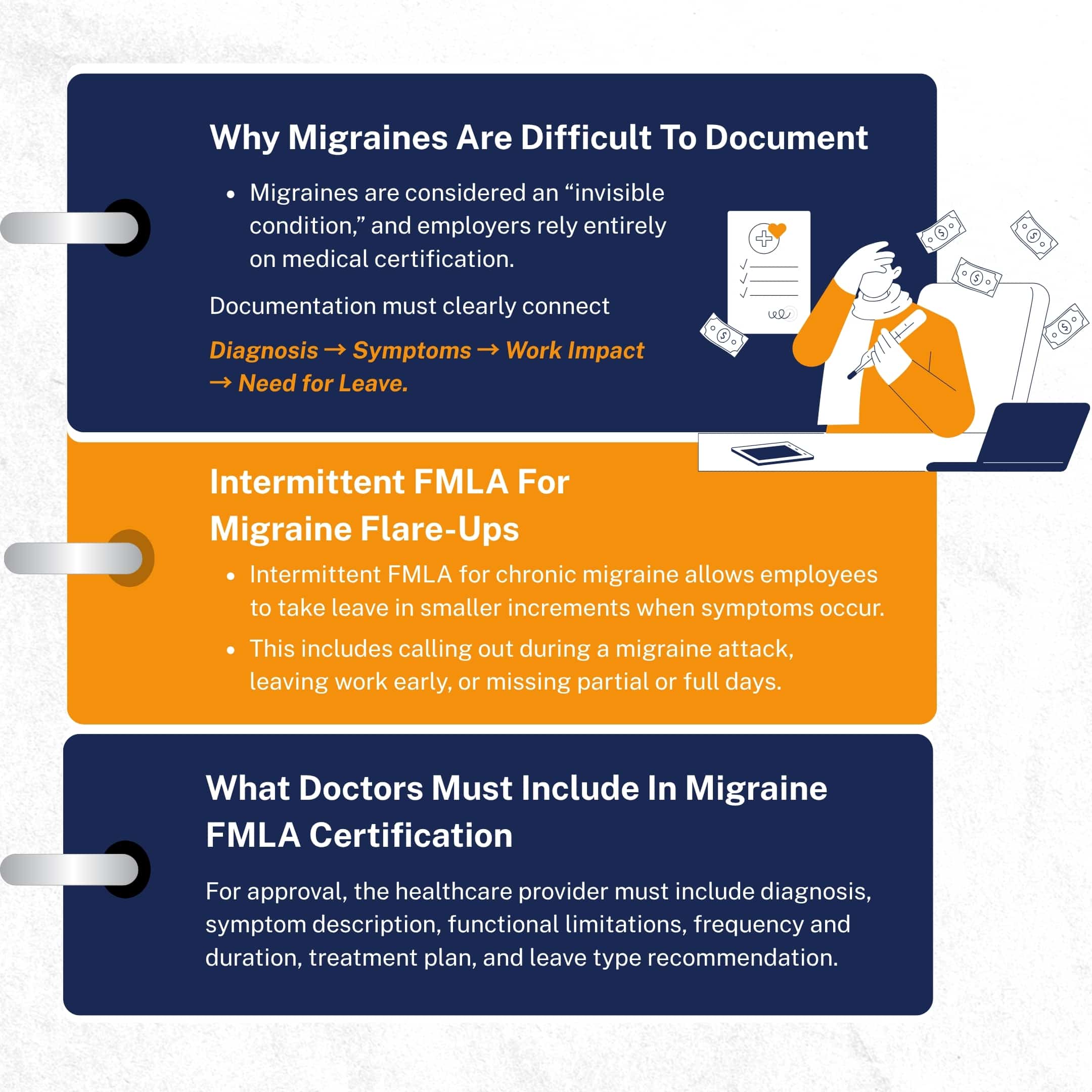
Migraines are considered an “invisible condition.” There are no visible injuries or standard diagnostic tests that prove severity in a straightforward way.
This creates challenges in FMLA for chronic migraine cases because employers rely entirely on medical certification.
Common documentation issues include:
- Vague descriptions like “frequent headaches”
- No mention of work limitations
- Missing frequency or duration of flare-ups
- Lack of clarity about treatment needs
To qualify successfully, documentation must clearly connect:
Diagnosis → Symptoms → Work Impact → Need for Leave
For example:
- Instead of: “Patient has migraines”
- Stronger: “Patient experiences migraines 2–4 times per month causing light sensitivity, nausea, and inability to use screens, requiring absence from work for 1–2 days per episode”
That level of clarity makes approval significantly smoother.
Intermittent FMLA for Migraine Flare-Ups
Because migraines are unpredictable, most employees do not need continuous leave. Instead, they need flexibility.
Intermittent FMLA for chronic migraine allows employees to take leave in smaller increments when symptoms occur.
This may include:
- Calling out during a migraine attack
- Leaving work early due to symptoms
- Taking time off for neurologist visits
- Missing partial or full days during flare-ups
This structure prevents employees from being penalized for attendance issues caused by a medical condition.
Why intermittent leave works best
Migraines:
- Do not follow a fixed schedule
- Vary in intensity
- Can last hours or days
- May be triggered by stress, screens, or environment
Intermittent leave aligns with this reality, making it one of the most commonly approved formats for migraine-related FMLA.
Why Reduced Schedule Leave Is Often Better Than Full Leave
Many employees with chronic migraines do not need continuous leave for weeks at a time. Instead, they need flexibility during unpredictable flare-ups.
This is where reduced schedule leave becomes one of the most valuable parts of FMLA for chronic migraine.
The Department of Labor allows leave on an intermittent basis or reduced work schedule when medically necessary.
This may include:
- Leaving work early during migraine onset
- Arriving late after severe morning symptoms
- Missing a day during a major flare-up
- Reduced weekly hours during unstable periods
- Time off for neurology appointments or treatment visits
For example:
A patient who experiences migraines 3–4 times per month may not need full medical leave but may require occasional absences and shorter workdays to remain employed safely.
Reduced schedule leave helps employees maintain job stability without forcing them into unnecessary full-time absence.
This is often the most realistic and sustainable option.

What Doctors Must Include in Migraine FMLA Certification
For FMLA for chronic migraine to be approved, the healthcare provider must complete a detailed certification.
Key elements include:
1. Diagnosis
A confirmed or clinically supported migraine condition.
2. Symptom Description
Including:
- Pain severity
- Light and noise sensitivity
- Nausea or vomiting
- Visual disturbances
- Cognitive impairment
3. Functional Limitations
How migraines affect:
- Screen use
- Focus and concentration
- Attendance reliability
- Ability to perform job tasks
4. Frequency and Duration
For example:
- “3 episodes per month lasting 1–2 days each”
5. Treatment Plan
Such as:
- Medication management
- Neurology visits
- Preventive care
- Follow-up appointments
6. Leave Type Recommendation
- Intermittent leave
- Reduced schedule leave
- Continuous leave (if severe)
Without these details, employers may delay or request additional information.
Common Reasons Migraine FMLA Requests Get Delayed
Even valid cases can face delays due to administrative issues.
The most common include:
- Incomplete certification forms
- Missing episode frequency
- Vague medical language
- Late submission of paperwork
- Inconsistencies between forms
These delays can create stress for employees already dealing with painful and disruptive symptoms.
This is why speed and clarity matter just as much as medical eligibility.
How Telemedicine Makes FMLA Certification Easier
Traditional in-person appointments can slow down the FMLA process. Waiting weeks for a doctor visit often leads to missed deadlines and workplace complications.
Telemedicine helps remove those barriers.
Benefits of telemedicine for migraine FMLA:
- Faster access to licensed providers
- Convenient consultations from home (especially during migraines)
- Quick review of symptom history
- Faster completion of FMLA paperwork
- Reduced delays in certification submission
For migraine sufferers, this is especially valuable. During a flare-up, traveling to a clinic may not even be possible. Telehealth allows patients to get evaluated and documented without worsening symptoms.
It also helps employees act quickly when they first realize they need FMLA protection—before attendance issues escalate.
How to Get FMLA for Chronic Migraine Step-by-Step
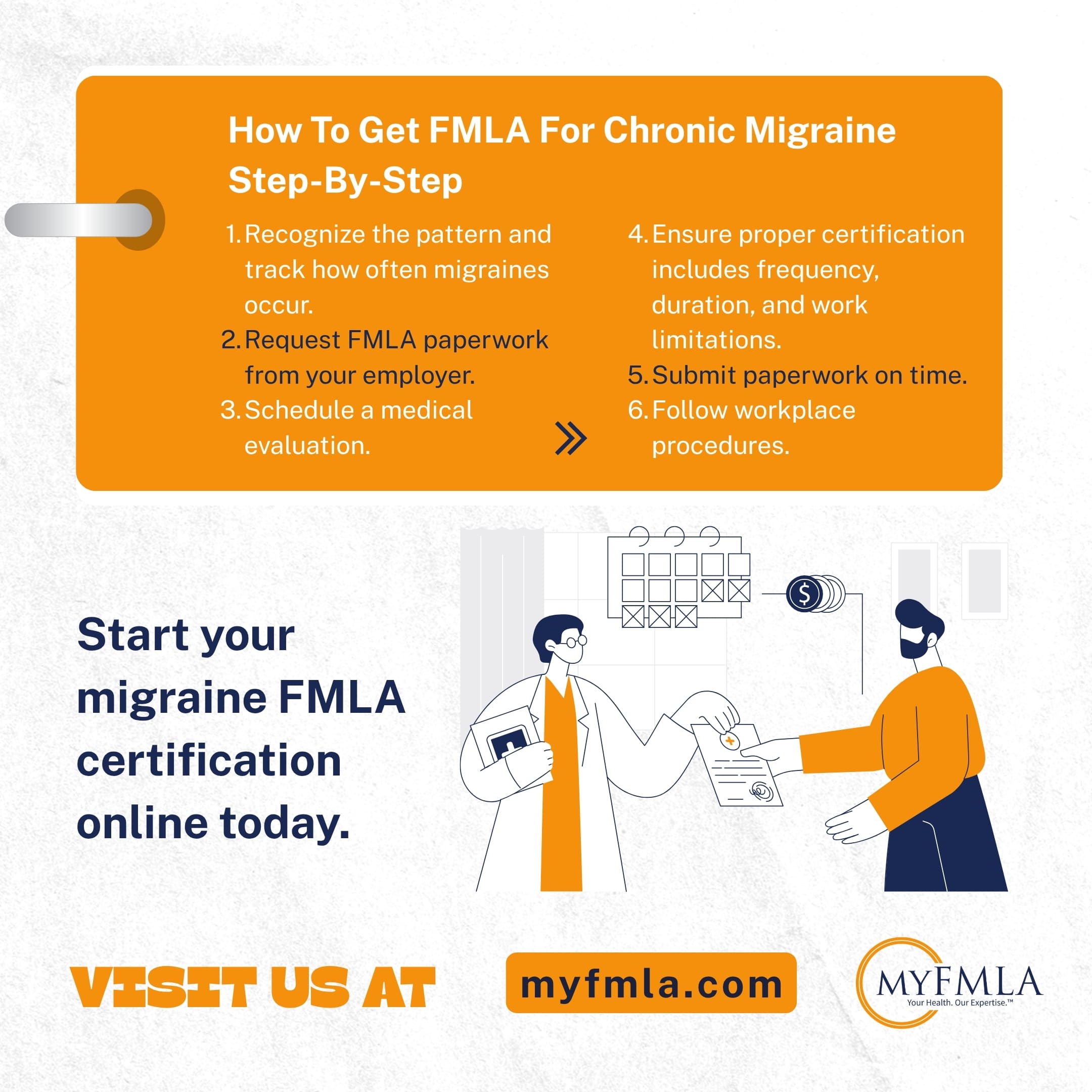
- Recognize the pattern
Track how often migraines occur and how they affect work. - Request FMLA paperwork from your employer
Do this as soon as the need becomes clear. - Schedule a medical evaluation
This can be in-person or through telemedicine. - Ensure proper certification
Make sure the provider includes frequency, duration, and work limitations. - Submit paperwork on time
Most employers require it within 15 days. - Follow workplace procedures
Report absences correctly, even after approval.
This process helps protect your job while ensuring compliance.
Why Timely Certification Protects Your Career
Migraines can quickly lead to attendance issues if not documented properly. Without FMLA protection, repeated absences may be treated as policy violations.
With proper certification:
- Absences are legally protected
- HR can track leave correctly
- You avoid disciplinary action
- You maintain job stability
For chronic conditions like migraines, this protection is essential.
How MyFMLA helps
If you are dealing with recurring migraines and need help completing your paperwork, timely and accurate documentation is critical. Delays in certification can lead to workplace complications, missed deadlines, and unnecessary stress.
MyFMLA makes the process easier by connecting you with licensed providers who complete FMLA certification online through a secure and streamlined system. Whether you need intermittent FMLA for migraines, reduced schedule leave documentation, or help from a doctor to fill out FMLA paperwork, the process is designed for speed and clarity.
With telemedicine-based support, you can get your certification completed without the hassle of scheduling delays or in-person visits—especially important when managing migraine flare-ups.
Start your FMLA certification with MyFMLA today and take control of your health while protecting your job.