
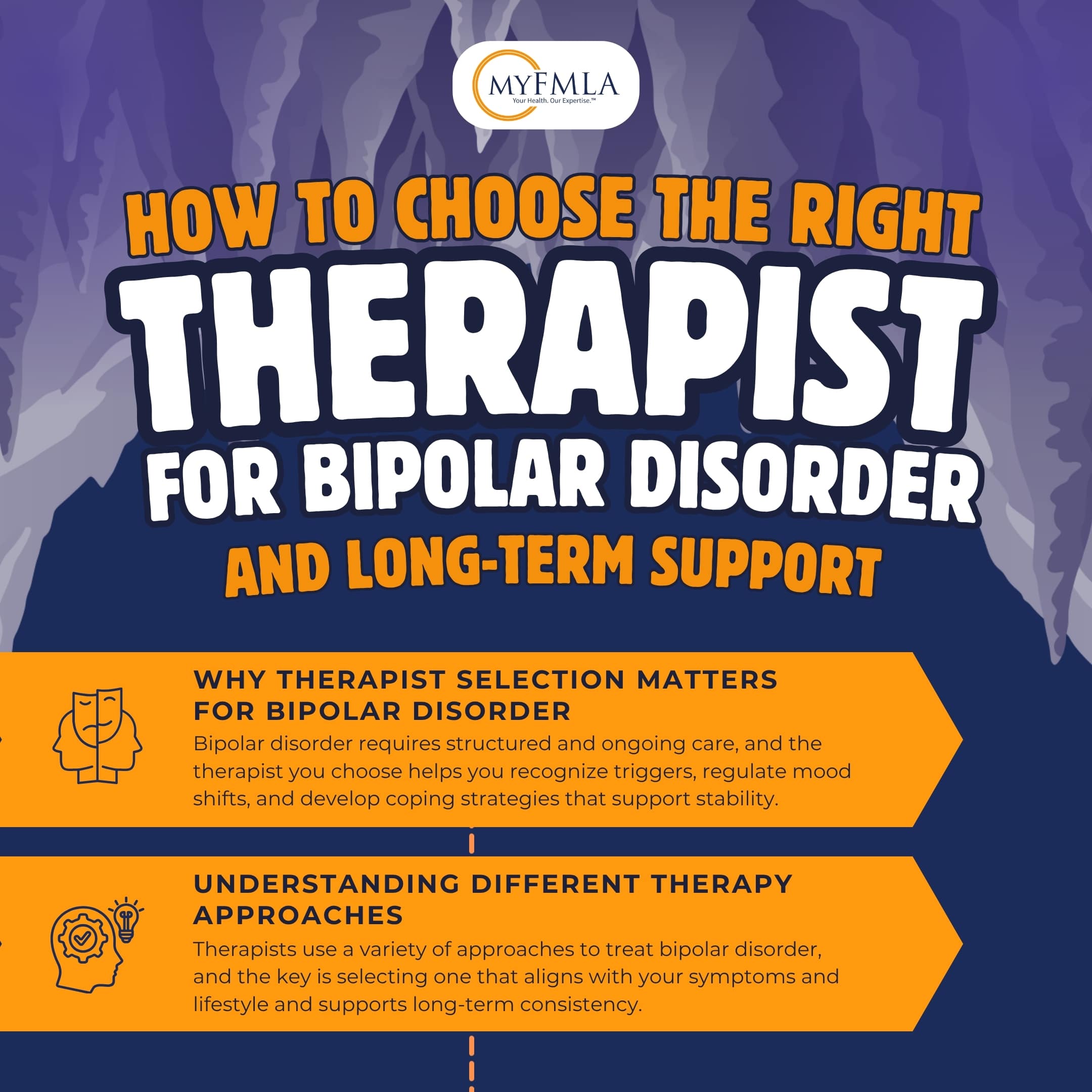
Finding the right therapist can feel overwhelming, especially when you are managing a condition as complex as bipolar disorder. The decision carries weight because the quality of your care directly affects your stability, daily functioning, and long-term well-being. Understanding how to choose the right therapist is not just about credentials or convenience. It involves evaluating experience, treatment approach, communication style, and how well the provider understands the unique challenges that come with bipolar disorder.
Many individuals begin their search during a difficult period, often after recognizing patterns in mood changes or receiving a diagnosis. At that point, the priority becomes finding consistent support that helps manage both manic and depressive episodes. A thoughtful approach to choosing a therapist creates a stronger foundation for long-term care and helps you navigate both personal and professional responsibilities more effectively.
Why Therapist Selection Matters for Bipolar Disorder
Bipolar disorder requires structured and ongoing care. Unlike short-term concerns that may resolve with brief support, this condition often involves long-term management strategies. The therapist you choose plays a key role in helping you recognize triggers, regulate mood shifts, and develop coping strategies that support stability.
When you understand how to choose the right therapist, you move beyond simply booking an appointment. You begin to evaluate whether a provider can offer consistent, informed care that aligns with your needs. This becomes especially important when symptoms affect your ability to work, maintain routines, or manage stress. In these situations, proper documentation and structured care may also intersect with processes like FMLA for bipolar disorder, making it even more important to work with a provider who understands both clinical and functional impacts.

Understanding Different Therapy Approaches
Therapists use a variety of approaches to treat bipolar disorder, and each method offers different benefits depending on your symptoms and goals. Cognitive Behavioral Therapy often focuses on identifying patterns in thinking and behavior, helping individuals manage depressive episodes and reduce negative thought cycles. Interpersonal and Social Rhythm Therapy emphasizes routine and stability, which are critical for managing mood fluctuations.
Some providers may integrate multiple approaches based on your needs. The key is not choosing the “most popular” method, but selecting one that aligns with your symptoms and lifestyle. As you explore how to choose the right therapist, consider how each approach fits into your daily routine and whether it supports long-term consistency.

Evaluating Credentials and Clinical Experience

Credentials matter, but they only tell part of the story. A licensed therapist should have the appropriate education and certification to practice, but experience with bipolar disorder carries equal importance. Providers who regularly work with mood disorders understand the nuances of manic and depressive cycles, medication coordination, and long-term symptom management.
When evaluating a therapist, consider how often they treat individuals with bipolar disorder and whether they stay updated on current treatment methods. This level of expertise supports more accurate assessments and more effective care plans. It also ensures that any documentation related to work accommodations or FMLA certification for mental health reflects a clear understanding of your condition.
The Importance of Compatibility and Communication
Clinical expertise alone does not guarantee a good therapeutic relationship. Compatibility plays a central role in the effectiveness of therapy over time. You need to feel comfortable discussing personal experiences, symptoms, and challenges without hesitation. A therapist’s communication style, tone, and responsiveness all influence how supported you feel.
Understanding how to choose the right therapist includes paying attention to how a provider listens, responds, and explains treatment strategies. If you feel rushed, misunderstood, or uncomfortable during early interactions, those concerns may continue throughout your care. A strong therapeutic relationship builds trust, which in turn supports long-term progress.
Questions to Ask During an Initial Consultation
An initial consultation offers an opportunity to evaluate whether a therapist is the right fit for you. Asking thoughtful questions helps you understand their experience, approach, and expectations. You may want to ask how they typically treat bipolar disorder, how they handle mood fluctuations, and how they measure progress over time.
It is also helpful to understand how they coordinate care with other providers, especially if medication management is part of your treatment. If your symptoms affect your ability to work, you can ask how they approach documentation for medical leave or workplace accommodations. These conversations can provide clarity, particularly if you are considering options like intermittent FMLA for mental health to manage unpredictable symptoms.
Recognizing Red Flags Early
Not every therapist will be the right fit, and recognizing red flags early can save time and frustration. A provider who dismisses your concerns, lacks familiarity with bipolar disorder, or offers overly generic advice may not provide the level of care you need. Similarly, inconsistent communication or unclear treatment plans can create confusion and reduce the effectiveness of therapy.
As you refine your understanding of how to choose the right therapist, trust your instincts. If something feels off, it is reasonable to explore other options. Therapy works best when you feel confident in your provider’s ability to support your long-term goals.
Considering Accessibility and Consistency
Consistency plays a major role in managing bipolar disorder. Regular sessions help track mood patterns, adjust strategies, and maintain stability over time. When choosing a therapist, consider factors such as availability, scheduling flexibility, and accessibility.
Telehealth options have made it easier to maintain consistent care, especially for individuals with demanding schedules or limited access to in-person services. This level of accessibility also supports individuals who need to manage documentation alongside treatment, including processes such as online FMLA certification when symptoms affect work responsibilities.
Aligning Therapy with Long-Term Support Needs
Bipolar disorder management extends beyond short-term symptom relief. It involves building routines, identifying triggers, and maintaining stability across different areas of life. A therapist should support not only immediate concerns but also long-term planning.
Understanding how to choose the right therapist means looking at the bigger picture. Consider whether the provider focuses on sustainable strategies, encourages self-awareness, and helps you build tools that support independence over time. Long-term support should feel structured, consistent, and adaptable to changes in your condition.
Integrating Work, Health, and Documentation
For many individuals, bipolar disorder affects both personal well-being and professional responsibilities. Managing symptoms while maintaining employment can be challenging, particularly when mood episodes are unpredictable. In these cases, therapy often intersects with documentation needs.
A therapist who understands workplace impact can provide guidance on managing responsibilities while supporting your health. This may include structured recommendations, communication strategies, or documentation aligned with FMLA paperwork for mental health. Integrating these elements into your care plan creates a more balanced approach to managing both work and health.
Building Confidence in Your Decision
Choosing a therapist is a personal decision that evolves. You may not find the perfect fit immediately, and that is part of the process. What matters most is your willingness to evaluate, adjust, and prioritize your mental health.
As you continue learning how to choose the right therapist, remember that the goal is not perfection. The goal is finding consistent, informed support that helps you manage bipolar disorder effectively and maintain stability in your daily life.

If you’re navigating bipolar disorder and need support that connects your treatment with work-related documentation, you can start your online FMLA certification with myFMLA today. Take the next step toward structured support by using a secure process designed to help you complete your paperwork and manage your condition with confidence.